click here for Part 2
The next few days were uneventful. That is to say, I was finally on holiday and enjoying life without having to think about where to obtain the next electrons. I did, however, discover that the campsite where I was staying had a charger, and I took advantage of it on my last day there. The only caveat was that it was an extremely slow one. I honestly just wanted to top up before making the drive north, but even though I was connected for over two hours, I only got a measly 50km out of it. I paid six euros since the campground charged by the hour and not by the kilowatt. I wondered if it was a fair price, but how could I know? Apparently, the different pricing mechanisms for electricity were as varied as the varieties of bacalhau in a typical Portuguese restaurant. Live and learn.
After enjoying a couple of days of respite from the charging saga, by the time I ended up at Viana do Castelo in the north, I was back in it. The drive up and a few days staying at the campsite had cost me the next 350km of charge. My next destination was in what is arguably the most remote area of Portugal, the Parque Nacional de Peneda-Gerês. I looked it up on Google Maps. There was only one electric charger in the entire vicinity of the park. And the park was not small. Between the winding roads and the vast distances, it might take me 50-100km to get there from the far corners of the park. I couldn't take any chances. I had to be damn sure I left civilisation with a full charge.
The Seven (Charging) Stations of the Cross
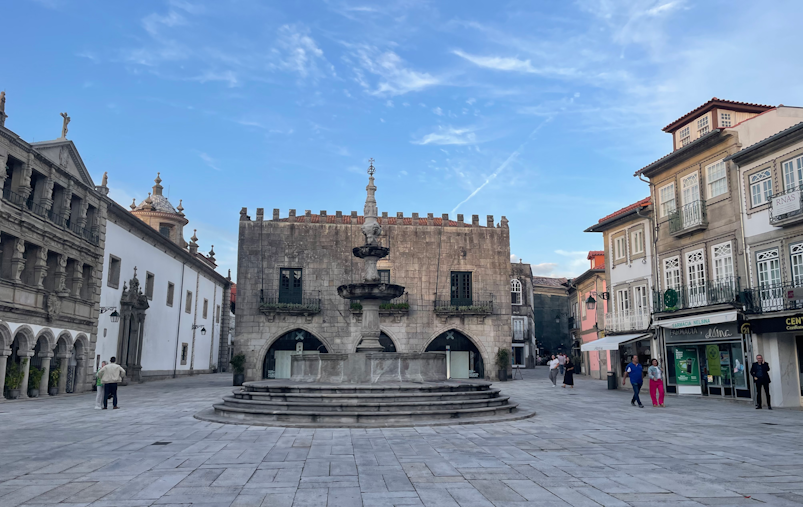
I made a plan to drive up to Viana do Castelo, leave the car at the charging station for a couple of hours, enjoy a nice brisk walk up to the sanctuary of Santa Luzia which has an amazing viewpoint over the city and the ocean, and grab a meal before making the journey to the mountains. Enthusiastically, I checked Google Maps and saw that there were at least three chargers within the general vicinity of where I wanted to park. As I drove over the bridge into town, finding the first one was not so difficult. It was located along the side of a busy road at the side of a Repsol station. This will be a piece of cake, I thought.
Pulling up and looking at the charger display, my enthusiasm quickly deflated. Déjà vu. 'Please use your card or give your client number,' it spelled out.
'Ah, merda,' I mumbled under my breath in frustration. So much for the quick and easy part. But at least I was at the petrol station. Surely they were responsible for the charger, unlike the supermarket, I surmised.
I walked into the premises and asked the attendant, 'I'd like to use the charger outside, but I don't have a card and I'm not a client. Can you give me a hand?'
She replied, 'Yes, but you have to install this app, Miio.' I asked her to spell it because I had no idea what it was. 'You just download it, scan it, and voilà, the charger should unlock,' she enthusiastically stated. Easy-peasy.
Ten minutes later, after multiple tries, entering my place of residence, phone number, credit card number, my grandmother's maiden name, and whether I'd like to be spammed for all eternity, I was able to open it. The app, that is. Not the charger.
Try as I did, all I got were a bunch of errors. I walked back into the petrol station and strutted over to the attendant, barely hiding my indignation. 'You told me to download this app and it would unblock the charger for me,' I exclaimed. 'I'm sorry, but it's not working for me. I tried everything.'
After inspecting my phone for a couple of minutes with a puzzled look, she walked out of the petrol station and over to the charger. She then proceeded to hit all the different options on the app and on the charger, but to no avail. 'This station only accepts a physical card,' the app declared.
'How can that be?' I asked the attendant, who was now giving me a sour look as there was a line of customers motioning at her from under the petrol station canopy. Apparently, she was the only one on duty that afternoon.
I looked at the app. It probably stated that it would take 10 to 15 business days to ship the card to your registered address. That would really help me, I blurted out sarcastically.
'What do I do?' I asked the attendant as she was about to walk away.
'I've had plenty of people here using this app and they've never run into a problem. Try dialling the customer service number.'
'Obrigado,' I answered, barely hiding the frustration in my voice. I know where that thread goes, I thought, remembering my unfortunate incident from two days ago. I wasn't going to waste any more time here. It was time for Plan B.
I still had about 20km of charge left, but the clock was ticking.
Just then, my friend pulled up on his bike. We'd agreed earlier to meet in the city and hang out. I'd messaged him earlier, thinking I'd leave the car there at the charger and join him in exploring the city. He didn't have a happy look on his face when I told him the charger wasn't working. Again. And that I'd have to find a working one as soon as possible before I could join him for anything fun.
'I'll let you know where I'm at,' I told him as I studied my newly downloaded app.
The app showed chargers that could be unlocked with it and whether they were available. In theory. In practice - I was to find out soon.
It appeared there were at least three on the other side of the city centre, and furthermore, they were fast. I'd learnt my lesson the other day: if I were to use a slow charger, I might have to spend the night here and never make it to the mountains. I shuddered at the thought of wasting another beautiful day.
I pulled away from the dingy roadside, driving on the bypass past the train station and the entrance to the old town. A thought flashed through my mind. Had I rented a normal car, I'd be looking forward to enjoying an evening there. Strolling down the narrow streets paved with intricate mosaics and grabbing a nice dinner. Instead, here I was, staring at my battery indicator and hoping I'd be able to charge at the next available station in a non-descript commercial zone.
I pulled up to the location of the fast charger that flashed on my new app's dashboard. It took me a minute to see that it was located in a KFC car park, next to the main road. The irony of that didn't escape me. Here I was in Portugal, meant to be walking along winding roads to glimpse the magical view of the mountains and the city. Instead, I had a glorious view of a dual carriageway and a KFC. Bem-vindo ao paraíso!
The app indicated the charger was available, and I didn't see anyone using it as I pulled up. However, when I approached it and tried to unlock it, the charger responded that it was unavailable. I tried to hit all the options on the app. 'Foda-se!' Here we go again.
My friend messaged me. 'Where are you?'
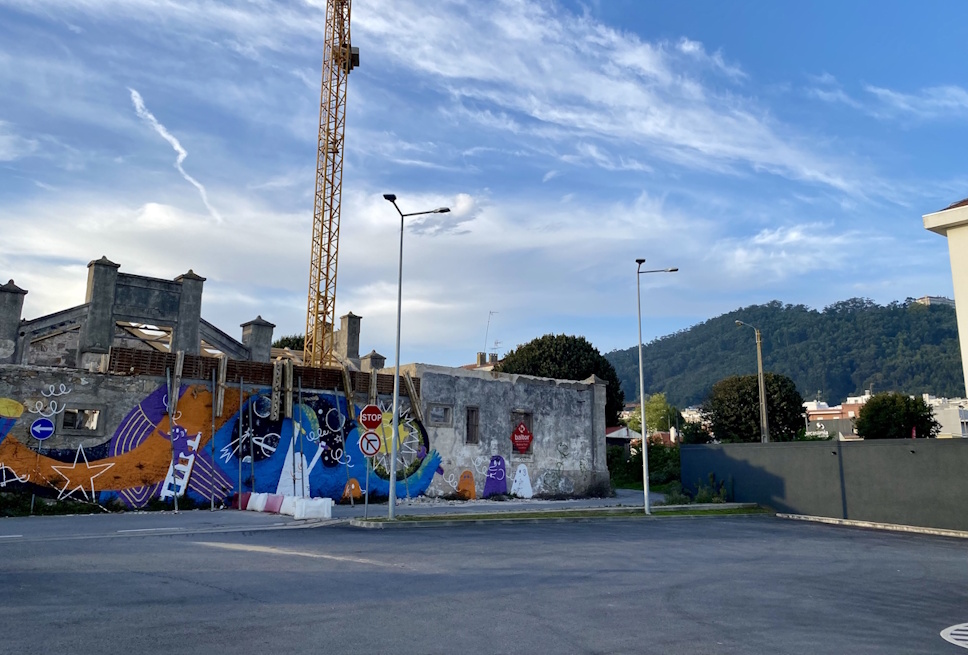
I told him I was at the car park of the KFC... but not for long.
Right. Where to next on my mis-adventure? There was an Aldi in the adjacent car park, and my app indicated there was a working charger there. It also indicated the charger was only 50kW - very slow. I reflected: I have to stock up on supplies for my trip to the mountains, so I might as well charge the car there. I pulled up to it and plugged in my cable. Opening the app, I was finally able to unlock the charger. Yay! Third time's the charm.
But as soon as the power started flowing, reality hit me.
Full time to charge: six hours.
In six hours, I should already be preparing for bed at my final destination, 200km away. Oh Scheiße! What do I do now?
Let's pause for a moment and take inventory of my situation:
Charger #1 (Repsol): App downloaded but not working. Needed physical card. Delivery time: 10-15 business days.
Charger #2 (KFC car park): App said 'available'. Charger said 'go fuck yourself'.
Charger #3 (Aldi): Working! But would take six hours. Six. Hours.
I'd been in Viana do Castelo for 90 minutes. All I'd seen of the city centre was a brief view as I'd stopped at a traffic light near the train station. I'd consumed zero seafood. I'd enjoyed zero views of the Atlantic.
What I had done: Downloaded two apps. Created three accounts. Provided four credit card numbers. Visited five car parks.
This is what the 'energy transition' looks like on the ground. Not a Tesla commercial. Not a sleek app interface. Five car parks and rising panic.
I messaged my friend, saying I had to switch locations again. As he pulled up, I recounted my tribulations. Looking exasperated, he said, 'It's been over an hour and a half now, and it'll soon be dark. I'm sorry, but I have to leave soon, and there's no way we'll have time to walk up to enjoy the view' - never mind the dinner.
I felt dejected, but he was absolutely right. Not only did I have to ditch my original plan for enjoying Viana do Castelo, I had to quickly find a fast charger. Otherwise, I wouldn't make it out of the city at all tonight.
Parting with my friend, I quickly walked into the supermarket to buy some food for the road and walked out 15 minutes later to inspect the battery indicator. Five hours to full, it said. I didn't even bother to check how much I'd paid as I unplugged the car and drove away.
Evening was fast approaching, and I was still with a mostly empty battery pack.
At this point, the tragedy turned into farce. Looking at my charger map, I saw there was a fast charger at a petrol station a few blocks away, but as you can already guess, it wasn't working with the app. 'Please swipe your customer card.'
I was ready to punch the LED display at this point, but that wouldn't have helped my case. As I got into the car, a sudden realisation hit me. I saw that there was a fast charger at Lidl a few kilometres away. I could make it there. As a frequent customer, I'd taken note occasionally that the chargers at Lidl were almost always in use. Not a guarantee that this one was open and working, but I couldn't take any more chances. It was getting late, and I was desperate to hit the road.
Turns out my hunch was right, and I was able to unlock the Lidl fast charger with my app. As the electrons started flowing, I looked at the dashboard. An hour and a half, it said. By the time the Peugeot was fully charged, it would be nine o'clock at night. I was resigned to the fact that I'd have to drive through the mountains in the dark, but more importantly, my original idea of camping there had gone down the drain. I'd have to quickly come up with Plan B for where I was going to spend the night.
And yeah, I was also getting hungry. I remembered my brilliant plan to enjoy a hearty plate of mariscos in town with my friend. So much for that.
LIDL, Pickles, and the Meaning of Life
I rummaged through my car to find ingredients to make a sandwich. I looked around. I was surrounded by typical ugly Portuguese modern flat blocks. An overflowing rubbish bin was on the other side of the road. I was standing outside my car under the screeching neon lights of the car park, with the bright yellow and blue Lidl sign shining at me in lieu of the setting sun.
I stood in the Lidl car park - because of course it was a Lidl car park - and started laughing. Not happy laughter. That semi-hysterical laughter that bubbles up when reality has become so absurd that your brain just... surrenders.

Let me paint the scene:
Typical Portuguese concrete apartment blocks all around. Bright LEDs making the white paint look even more garish. Fake balconies. Someone's laundry hung motionless in the evening air.
Behind me: an overflowing rubbish bin. The smell of rubbish mixing with the smell of diesel from the road.
And me: leaning against a €40,000 electric vehicle, eating a sandwich assembled from supplies in my car boot.
This morning, I'd been planning mariscos in a centuries-old restaurant in Viana's historic centre, watching the sunset over the Atlantic.
At least the sandwich was top-notch - but it only served to remind me that I was supposed to be in the mountains by now.
A woman exited Lidl, saw me, and hurried to her car.
I raised my sandwich in a mock toast. 'Living the dream!' I thought.
She loaded her groceries faster.
You know what? Fine. I went inside. I bought a jar of pickles. I came back out and ate pickles straight from the jar with my fingers whilst my car slowly, slowly charged.
This is exactly the kind of moment they don't put in the Tesla commercials.
I was just pouring tea from my thermos - yes, I'd brought a thermos to a Lidl car park; this was my life now - when a Tesla Model Y pulled in.
The Tesla Confrontation
Brand new. That matte black that screams 'I subscribe to TechCrunch.'
The driver rolled down his window. Mid-30s. Open-collar shirt. Expensive sunglasses pushed up on his head even though it was well past dark. The kind of guy who says 'crushing it' unironically.
'How long you gonna be?'
Not 'excuse me'. Not 'sorry to bother you'. Just: 'How long?'
I glanced at the charging display. 'Forty minutes. Minimum.'
His face went through a visible calculation. Dashboard. Me. Charging post. How desperate was he? How much range did he have?
'Seriously? You can't unplug for five minutes so I can top up?'
In an alternative universe, I would have unplugged my car and let him charge for a few minutes.
But that was before:
- Getting stranded in a random village
- Pushing my car through a window
- Discovering defunct charging companies
- Touring seven broken stations
- Eating sad sandwiches under neon lights
'Sorry, mate,' I said. Not sorry. 'I need every minute of this charge.'
He stared at me. I stared back, pickle jar in one hand, tea in the other.
Finally, without a word, he rolled up his window and drove off.
I should have felt bad. The Tesla guy was probably in the same bind I'd been in that morning. But mostly? I felt a savage, territorial satisfaction. I'd had to pass through seven circles of charging hell to get to this point.
Welcome to the charging wars, buddy. May your battery hold longer than mine.
I took a sip of tea. By now it was cold. I drank it anyway.
In the side mirror, I watched the Tesla drive in circles, hunting for another charger. Part of me felt guilty. A smaller part felt satisfaction. The largest part just felt tired.
The feeling of contentment quickly faded as I realised I'd be sleeping in my car unless I quickly found a place to stay for the night. It was nearing nine o'clock, and my original plan for camping in the mountains had fallen through four hours ago. As I watched the battery indicator creeping up slowly as a snail along a wall, I had to come up with Plan B. I unlocked my phone and started desperately looking on various booking sites to see if there was any lodgement that would be open at such a late hour. Taking no chances, I wanted to confirm that I could indeed arrive so late in the evening. To my fortune, on the second try, I got through to the reception of a guest house. The guy on the other side of the line patiently listened as I explained my predicament and why I'd be arriving so late. He said I could show up before 11 o'clock, when he shut the bar and went home. As I hung up the phone in relief, I looked at the charging level. Ninety-five per cent. I'd learnt my lesson from the previous time. That last five per cent could cost me another half-hour. At this point, I had to scramble if I had any hope of making it to my destination in time.
Triumph in the Mountains
As I pulled away from the now-empty car park, I replayed the day in my mind. What was supposed to be a fun day in the city and a relaxing drive had turned out to be a bloody nightmare. Moreover, I still had nearly two hours of driving in the night up to the mountains. Thankfully, this is the part where the Peugeot shone. For the first time in the entire trip, I was very happy I had an electric drivetrain at my disposal. Driving up and down the steep and narrow roads in the wildest region of Portugal was a blast compared to what I would have experienced with my petrol car. Consequently, I arrived at the destination with 15 minutes to spare. To my surprise, this place was much better than expected, given the cost and the fact I was there not out of choice but by necessity. And the biggest surprise was that the guest house owner had his own bona fide electric charging station right on the property, where I could leave the car to charge overnight. In the middle of nowhere, I might add. I'd only used a quarter of the battery charge on the way there, but being in such a remote area, every electron counted. I happily took up the offer as I left the car charging in the night, the green flash visible from a distance in the pitch-black night. There were plenty of adventures in the next few days, but for the purposes of this story, they're extraneous, as I mostly used my two feet to get around. Other than perhaps the comical anecdote about the contrast between my friend's drive and mine up and down the main park road. As he pulled up to our meeting point, he recounted that in several sections it was so steep that he'd had to get into first gear, using all the power of his van, and even then was barely driving at 20km/h. 'Really?' I enquired. I'd hardly noticed the steep sections as I'd been breezing up and down in my Peugeot. In fact, because of regenerative braking, I'd hardly seen the battery indicator moving down. For a change. Enjoying the stunning scenery of the park and the amazing weather, I nearly forgot the trials and tribulations of my first few days of the trip. But unfortunately, just like for Cinderella, my carriage turned into a pumpkin on the final day, when I had to figure out how to return the car to Lisbon with a full charge, two-thirds of Portugal away.
But that's a next time in Part 4.